
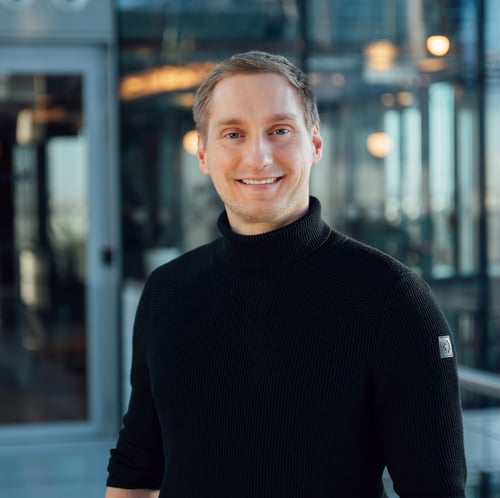
Four years ago, Ricardo Brito says, he was a cook pretending to be a chef. He served many clients with almost no processes, assumed a one-person business needed none, and ended up with a scattered clientele and scattered budgets. His talk uses a restaurant kitchen to separate freelancing from running a solo business. Neither is better, he stresses; the trouble starts when you act as one while being the other.
What the talk covers
- Cook and chef: the cook executes a dish and trades time for money, the chef decides what goes on the menu, why, and how it turns a profit.
- The menu grows out of fear: a client asks for a workshop, then a landing page, and soon you offer sushi, burgers and pasta. Clients no longer know what to order.
- Stop talking about knives. Tools, skills and process matter to you; clients care about the dishes, the outcomes. How you work comes later.
- Cooking in someone else's kitchen: you move from client to client and nothing builds up. A solo business is a restaurant that keeps running when you are away, with processes, costs and a strategy behind it.
- Adding a template or a productised service does not help while the client is undefined. Ask first who the restaurant is for, what is on the menu, and what your signature dish is.
Q&A
- Client acquisition has no single method; it depends on person and business.
- Clients asking you to use AI: ask why. Early in the sales process it may signal a hired hand, late in it usually a price check or a wish to look modern.
- One business or several? Build one until it is profitable, and treat the second as R&D.
- Solopreneur versus entrepreneur: a solopreneur keeps it small by default.
Who it's for
Freelancers who wonder whether to build a business of their own.